Making a fresh milled flour bread recipe at home is one of the most rewarding ways to enjoy real, wholesome bread with superior flavor and nutrition. Unlike store-bought loaves made from refined flour, bread baked with freshly milled grains retains the natural bran, germ, and endosperm, resulting in better texture and higher nutritional value.
This beginner-friendly recipe is designed to guide you step by step, helping you achieve a soft, sliceable loaf perfect for everyday sandwiches. Whether you are transitioning from white flour or learning to work with whole grains, this homemade sandwich bread, freshly milled flour, whole grain bread, soft wheat bread, and everyday bread recipe will help you build confidence and bake consistently delicious results at home.
What Is Fresh Milled Flour Sandwich Bread?

Fresh Milled Flour Bread Recipe
Fresh milled flour sandwich bread is a loaf made from whole wheat berries that you grind at home right before mixing your dough. This method preserves the vital oils, vitamins, and minerals that commercial processing usually removes to extend shelf life. When you bake freshly milled flour bread, you are serving your family a product that is alive with flavor and nutrition.
Unlike standard whole wheat bread loaf options at the grocery store, this bread is not bitter or heavy. The oils in the freshly ground flour have not gone rancid, which creates a lighter and sweeter taste profile. This Fresh Milled Flour Sandwich Bread – Easy Everyday Recipe specifically targets that soft texture we all love in a classic sandwich slice.
Difference Between Fresh Milled and Aged Flour
Aged flour has been stripped of the bran and germ or allowed to oxidize, which stabilizes it but kills the flavor. When you use a grain mill to create fresh milled flour, you keep all the parts of the seed intact. This results in a 100% whole grain bread that behaves differently than all-purpose flour, requiring specific hydration and handling techniques.
Exploring Varied Fresh Milled Flour Bread Recipes
Once you are comfortable with this everyday sandwich loaf, you can start exploring other fresh milled flour bread recipes. You might want to try a crusty fresh milled flour french bread recipe, different hearty fresh milled whole wheat bread recipe variations, or even rustic artisan bread with fresh milled flour. Many bakers enjoy experimenting with specific grains to create unique flavors, such as a robust fresh milled hard red wheat bread recipe.
As you gain confidence, learning about converting recipes to fresh milled flour from standard cookbooks opens up a new world of fresh milled wheat recipes. You can find wonderful inspiration and diverse fresh milled flour recipes bread ideas from various sources, including niche communities like grains in small places bread bakers.
Mastering Your Home Milled Flour Bread Recipe
Learning exactly how to make bread with fresh milled flour is a rewarding process. While you are searching for the best fresh milled flour bread recipe for your family, you will likely try many different milled flour recipes. Whether you refer to it as a milled bread recipe, a milled grain bread recipe, or simply bread from fresh milled flour, consistent practice is the secret to success.
This guide offers a solid foundation for baking bread with fresh milled flour, helping you succeed with almost any bread recipe using fresh milled flour. We believe this specific bread recipe fresh milled flour guide is the easiest route to enjoying delicious fresh milled bread and mastering your own home milled flour bread recipe. Ultimately, making bread with fresh milled flour is about finding the fresh milled bread recipe that brings joy to your kitchen.
Benefits of Using Fresh Milled Flour for Sandwich Bread
The primary benefit of choosing this everyday sandwich bread is the massive upgrade in health value for you and your kids. Whole grain nutrition provides essential fiber, B vitamins, and healthy fats that support digestion and sustained energy levels throughout the day. No preservatives bread means you control exactly what goes into your body, avoiding the long list of chemicals found on plastic wrappers.
Additionally, the flavor of fresh ground wheat bread is vastly superior to anything you can buy. The natural sweetness of the wheat comes through, reducing the need for added sugars in the recipe. Making soft whole wheat bread at home also saves money over time, as buying bulk wheat berries is cheaper than buying premium artisan loaves.
Nutritional Powerhouse: Vitamin E and Fiber Content

Fresh Milled Flour Bread Recipe
Commercial flour loses its Vitamin E content almost immediately after milling, but fresh milled flour retains this powerful antioxidant. A single slice of this simple wheat bread recipe is packed with fiber that aids gut health and keeps you feeling full longer than white bread ever could.
Ingredients Needed for Fresh Milled Flour Sandwich Bread
To make this soft sandwich loaf, you need high-quality ingredients that work together to create lift and structure. The core of this recipe relies on warm water, a natural sweetener like honey, oil or butter, salt, and active dry yeast for that classic rise. You also need freshly ground flour milled from hard white wheat or hard red wheat to provide the necessary protein for gluten development.
For the best texture in this Fresh Milled Flour Sandwich Bread – Easy Everyday Recipe, we recommend using sunflower lecithin or vital wheat gluten if you are new to milling. These optional ingredients help relax the dough and strengthen the rise, ensuring you don’t end up with a dense brick. Proper dough hydration is crucial, so always measure your water carefully.
Essential Staples for Soft and Fluffy Loaves
You cannot achieve a soft bread crumb without the right balance of moisture and fat. Using a liquid fat like olive oil or melted butter tenderizes the crumb, making it perfect for sandwiches. Yeast fermentation is the engine of your bread, so ensure your yeast is fresh and active before you begin mixing.
Best Wheat Grains for Sandwich Bread (Hard White, Hard Red & Kamut)
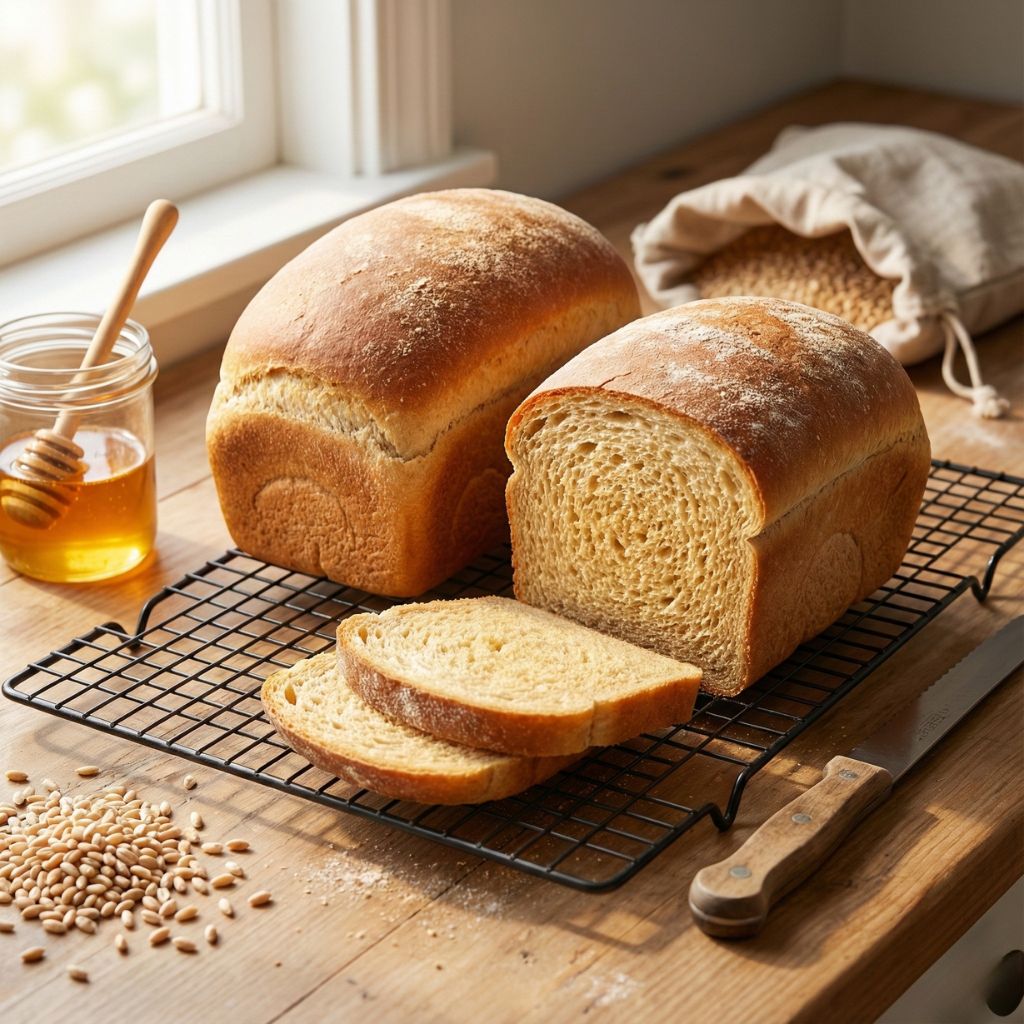
Fresh Milled Flour Bread Recipe
Selecting the right grain is the most fun part of making homemade wheat bread. Hard white wheat is the most popular choice for families because it has a mild flavor and a lighter color that resembles white bread. Hard red wheat offers a more traditional, nuttier “whole wheat” taste that pairs beautifully with hearty soups and toasted sandwiches.
For those who want a buttery, golden loaf, Kamut wheat (also known as Khorasan wheat) is an ancient grain that tastes incredible. You can even mix these grains to create a custom blend for your whole grain sandwich loaf. Understanding your grain choice is key to mastering this Fresh Milled Flour Sandwich Bread – Easy Everyday Recipe.
| Wheat Type | Flavor Profile | Best For |
| Hard White Wheat | Mild, sweet, light color | Kids, PB&J, Grilled Cheese |
| Hard Red Wheat | Nutty, earthy, darker color | Toast, Hearty Sandwiches |
| Kamut Wheat | Buttery, rich, golden hue | Gourmet Sandwiches, Dinner Sides |
Choosing the Right Berry for Your Palate
If you are transitioning your family from store-bought white bread, start with hard white wheat for a smoother transition. Bread made from wheat berries gives you the flexibility to experiment, but the protein content in hard varieties is essential for the structure of a tall sandwich loaf.
Can You Make Fresh Milled Flour Sandwich Bread with Sourdough Instead of Yeast?
Yes, you can absolutely adapt this into a sourdough sandwich bread if you prefer wild yeast over commercial yeast. Sourdough fermentation breaks down the gluten and phytic acid in the wheat even further, making it easier to digest. However, sourdough sandwich bread typically requires much longer rise times than a yeast-based easy everyday recipe.
To make the switch, you will replace the yeast and a portion of the flour and water with your active sourdough starter. The result is a tangy, complex homemade sandwich bread that stays fresh longer naturally. Just remember that yeast sandwich bread is faster and more predictable for beginners.
Converting Commercial Yeast Recipes to Sourdough Starter
When converting, use about 100 grams of active starter for every loaf of bread you plan to bake. You will need to extend your first rise (bulk fermentation) to several hours and let the second rise happen slowly, possibly overnight in the fridge.
Equipment and Bread Pan Sizes Explained
Having the right tools makes this Fresh Milled Flour Sandwich Bread – Easy Everyday Recipe a breeze. You need a powerful grain mill like a Nutrimill grain mill or a Mockmill to get a fine flour texture. A heavy-duty mixer, such as a Bosch mixer or a KitchenAid with a spiral stand mixer dough hook, is vital because hand-kneading fresh flour takes a lot of effort.
Your choice of pan determines the shape of your final loaf. A 4×8 bread pan creates a taller, more domed loaf, while a 5×9 bread pan yields a wider, flatter slice. For that perfect square bakery look, many bakers prefer a Pullman pan or a standard 4.5×8.5 loaf pan to support the dough as it rises.
Why Your Mill and Mixer Matter
A standard blender cannot grind wheat fine enough for light bread; you really need a dedicated mill. Similarly, fresh flour dough requires vigorous kneading to pass the window pane test, which is why a strong motor on your mixer is a worthy investment for frequent bakers.
Step-by-Step Instructions to Make Fresh Milled Flour Sandwich Bread
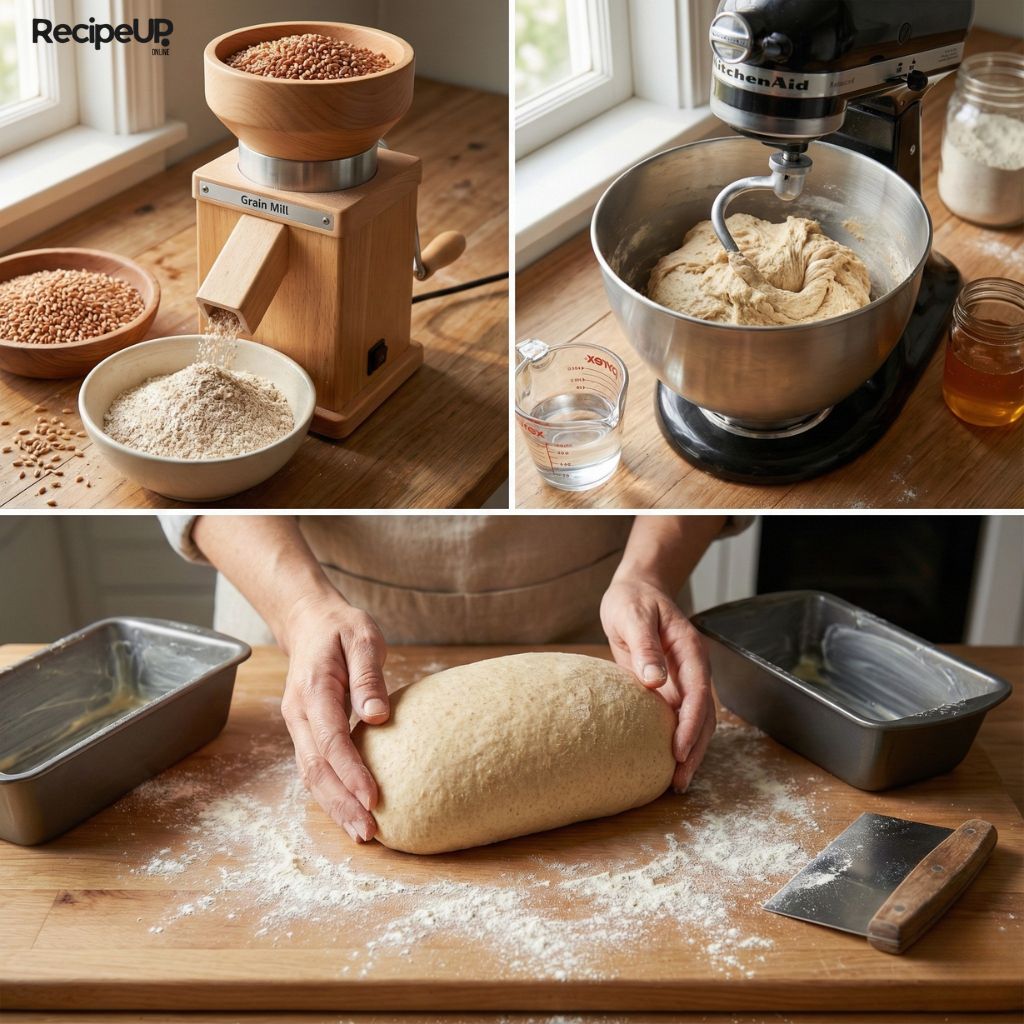
Fresh Milled Flour Bread Recipe
Start by milling your grain on the finest setting to get fluffy fresh milled flour. Combine your warm water, honey, and yeast, letting it sit for a moment to activate. Add your flour and salt, then begin the mixing process. Many bakers use the sponge method, where you mix half the flour with the liquids and let it sit to hydrate before adding the rest.

Fresh Milled Flour Bread Recipe
Once all ingredients are incorporated, kneading dough is the most critical step. Run your mixer on speed 2 or 3 for about 8 to 12 minutes. You are looking for the dough to pull away from the sides of the bowl cleanly and become smooth and elastic. This structure is what traps gas during yeast fermentation.
Mixing, Kneading, and the Windowpane Test
To ensure your gluten is fully developed, grab a small piece of dough and stretch it between your fingers. If it stretches thin enough to see light through it without tearing, it passes the window pane test. If it tears immediately, keep kneading for another two minutes.
Shaping, Baking, and Getting a Soft Sandwich Crumb

Fresh Milled Flour Bread Recipe
After the first rise (when the dough doubles in size), turn it out and divide it for your pans. Press the dough flat to remove air bubbles, then roll it up tightly like a sleeping bag. This surface tension shaping forces the dough to rise upward rather than outward, giving you that beautiful oven spring.
Place the shaped dough into your greased pans for the second rise or proofing dough. Preheat your oven while the dough rises just above the rim of the pan. Bake at a baking temperature 350°F for 30-35 minutes. Using an instant-read thermometer, check that the internal temperature 190°F is reached to ensure it’s cooked through.
Techniques for a Perfectly Domed Loaf
For a shiny, golden crust, you can brush an egg wash bread mixture over the top before baking. Avoid over-proofing, as this can cause the loaf to collapse in the oven; it is better to put it in the oven slightly early than too late.
How to Store, Slice, and Freeze Fresh Milled Flour Bread
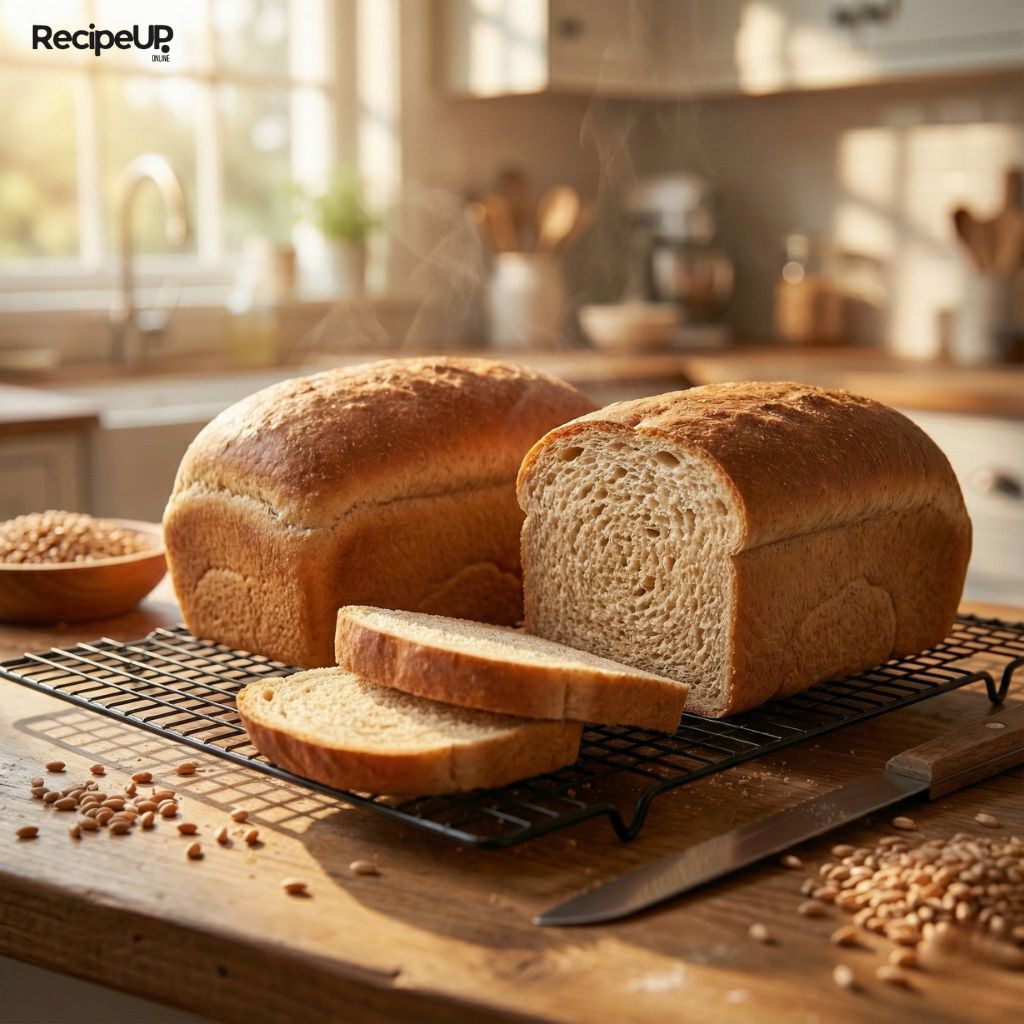
Fresh Milled Flour Bread Recipe
Never slice your bread while it is hot, or you will ruin the soft bread crumb and make it gummy. Let it cool completely on a wire rack for at least an hour. For storing fresh bread, keep it in a linen bread bag or a bread box on the counter for up to three days.
If you cannot eat the loaf quickly, freezing homemade bread is the best way to preserve freshness. Slice the entire loaf once cooled, place parchment paper between slices, and seal it in a freezer-safe bag. You can toast individual slices directly from frozen for a quick breakfast.
Keeping Your Homemade Loaf Fresh for Days
Fresh flour bread lacks chemical preservatives, so it stales faster than Wonder Bread. Adding a fat source like butter, oil, or lecithin to the dough helps retain moisture, keeping your everyday sandwich bread soft for longer.
Beginner Tips, Common Mistakes, and Next-Level Bread Ideas
The most common mistake with fresh milled flour sandwich bread is adding too much flour. The dough should be tacky to the touch, not dry. If your bread is dense, check your dough hydration or ensure your yeast is not expired. Another issue is cutting into the loaf too soon, which lets steam escape and dries out the interior.
Once you master this simple wheat bread recipe, try adding mix-ins. Cinnamon raisin swirls, sunflower seeds, or savory herbs can take your homemade vs store bought bread comparison to a new level. You can even use this same dough to make burger buns or dinner rolls.
More Recipes:
Viral Pink Salt Trick Recipe: The Detox Drink Explained
Brazilian Mounjaro Drink Recipe
Buona Beef Tuna Genovese Recipe – Bold, Healthy Italian Flavor
Russian Fish Baked in Milk with Onions Recipe for Potluck
Troubleshooting Dense or Crumbly Loaves
If your bread crumbles when sliced, it likely needed more kneading or more moisture. Remember that the weather and humidity affect how much flour you need, so always go by the feel of the dough rather than the exact gram measurement.
FAQs
What is the healthiest flour for making bread?
Fresh milled whole wheat flour is considered the healthiest because it contains the bran, germ, and endosperm, providing more fiber, vitamins, and minerals.
Is baking with fresh milled flour different?
Yes, fresh milled flour absorbs more liquid and behaves differently than store-bought flour, so hydration, kneading, and rise times often need adjustment.
Can you replace all-purpose flour with fresh milled flour?
Yes, but not one-to-one; fresh milled flour usually needs more liquid and longer mixing or resting time to develop proper structure.
Why is my fresh milled flour bread so dense?
Dense bread is usually caused by under-kneading, insufficient hydration, weak gluten development, or not allowing enough rise time.
Soft Fresh Milled Sandwich Bread
Ingredients
Equipment
Method
- Mill Flour: Grind your hard white wheat berries on the finest setting of your grain mill just before you are ready to bake.
- Activate Yeast: In the bowl of your heavy-duty stand mixer, combine the warm water, honey, and instant yeast. Let the mixture sit for about 5 minutes until it becomes foamy and bubbly.
- Initial Mix: Add the olive oil, optional sunflower lecithin, salt, and approximately 6 cups of the fresh milled flour to the yeast mixture. Turn the mixer on low using the dough hook until combined.
- Knead and Test: With the mixer running on medium speed (speed 2 or 3), slowly add the remaining flour 1/2 cup at a time. Stop adding flour when the dough cleans the sides of the bowl but is still tacky to the touch. Knead for 8-12 minutes. The gluten is developed when you can stretch a small piece of dough thin enough to see light through it without tearing (the “windowpane test”).
- First Rise: Remove the dough hook, cover the bowl with a lid or towel, and let it rise in a warm place until it has doubled in size (approximately 45 to 60 minutes, depending on room temperature).
- Shape Loaves: Punch the dough down to release air bubbles. Turn it out onto a lightly oiled surface and divide it into two equal portions. Press each portion flat into a rectangle, then roll it up tightly like a jelly roll, pinching the seams closed to create surface tension. Place the loaves into greased bread pans.
- Second Rise & Preheat: Cover the pans loosely. Let them rise again until the dough crests about one inch over the rim of the pan (about 30-45 minutes). While rising, preheat your oven to 350°F (175°C).
- Bake: Bake the loaves at 350°F for 30-35 minutes. The tops should be golden brown. To ensure they are done, check the internal temperature with an instant-read thermometer; it should read between 190°F and 200°F (88°C – 93°C).
- Cool: Remove the loaves from the pans immediately and place them on a wire rack. Allow them to cool completely for at least one hour before slicing to prevent a gummy texture.
Notes

Emily Carter is a home cooking enthusiast and recipe developer with a passion for creating simple, reliable meals for everyday life. She focuses on quick recipes made with accessible ingredients and clear instructions. Emily enjoys experimenting with modern cooking methods and sharing practical food ideas that help home cooks save time while enjoying flavorful, homemade dishes.